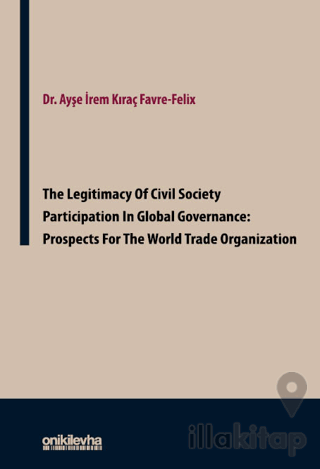
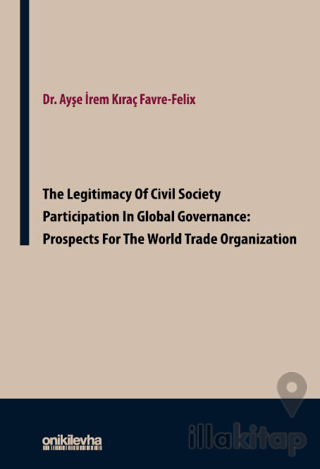
The Legitimacy of Civil Society Participation in Global Governance: Prospects for the World Trade Organization
Since the Seattle Millennium Round meetings, the World Trade Organization (WTO) has taken centre stage in debates over global economic governance. Besides the concerns recurrently raised by civil society, new contentions emerged: the blocking of the appointment of the WTO Appellate Body Members, the increase in protectionist trade measures among major trade partners, including the United States and China, and the global supply/value chain (GVC) vulnerabilities exposed by the COVID-19 pandemic. In response, the WTO's law/decision-making procedures have come under scrutiny from academics across various disciplines, policymakers, and civil society representatives. On the other hand, global economic governance has become even more necessary given the number of issues that have been globalized and require regulation. In addition to always-being-transboundary issues, such as tariffs and customs governance, global innovations have necessitated global regulations for the trade-environment nexus, IA regulation, e-trade, global pandemics, GVCs, etc. Thus, well-functioning global governance institutions to stimulate collective action on regulation, as well as platforms for global communication to advance the democratic debate on these global issues and rule-making, have become essential. This indicates to us that world trade law/order might require reforms based on more participatory processes, which should lead to more constructive communication between WTO Members and civil society and to more agreeable solutions for broader segments of the global community. With these concerns in mind, this book examines the potential role of civil society in securing more agreeable solutions, acceptance, and ownership within the larger global polity and brings together its original normative proposal with practical policy recommendations.
Since the Seattle Millennium Round meetings, the World Trade Organization (WTO) has taken centre stage in debates over global economic governance. Besides the concerns recurrently raised by civil society, new contentions emerged: the blocking of the appointment of the WTO Appellate Body Members, the increase in protectionist trade measures among major trade partners, including the United States and China, and the global supply/value chain (GVC) vulnerabilities exposed by the COVID-19 pandemic. In response, the WTO's law/decision-making procedures have come under scrutiny from academics across various disciplines, policymakers, and civil society representatives. On the other hand, global economic governance has become even more necessary given the number of issues that have been globalized and require regulation. In addition to always-being-transboundary issues, such as tariffs and customs governance, global innovations have necessitated global regulations for the trade-environment nexus, IA regulation, e-trade, global pandemics, GVCs, etc. Thus, well-functioning global governance institutions to stimulate collective action on regulation, as well as platforms for global communication to advance the democratic debate on these global issues and rule-making, have become essential. This indicates to us that world trade law/order might require reforms based on more participatory processes, which should lead to more constructive communication between WTO Members and civil society and to more agreeable solutions for broader segments of the global community. With these concerns in mind, this book examines the potential role of civil society in securing more agreeable solutions, acceptance, and ownership within the larger global polity and brings together its original normative proposal with practical policy recommendations.
| Taksit Sayısı | Taksit tutarı | Genel Toplam |
|---|---|---|
| Tek Çekim | 1.104,00 | 1.104,00 |
| 2 | 590,64 | 1.181,28 |
| 3 | 401,12 | 1.203,36 |
| 6 | 211,60 | 1.269,60 |
| 9 | 147,20 | 1.324,80 |
| 12 | 115,92 | 1.391,04 |
-
%8İNDİRİM1.500,00TL 1.380,00TL
-
-%8
 Stokta yok%8İNDİRİM1.200,00TL 1.104,00TL
 -
%8İNDİRİM1.700,00TL 1.564,00TL
-
%8İNDİRİM1.100,00TL 1.012,00TL
-
-%8
Stokta yok%8İNDİRİM1.050,00TL 966,00TL
-
-
%8İNDİRİM1.700,00TL 1.564,00TL
-
-%8
Stokta yok%8İNDİRİM275,00TL 253,00TL
-
%8İNDİRİM375,00TL 345,00TL
-
%8İNDİRİM550,00TL 506,00TL