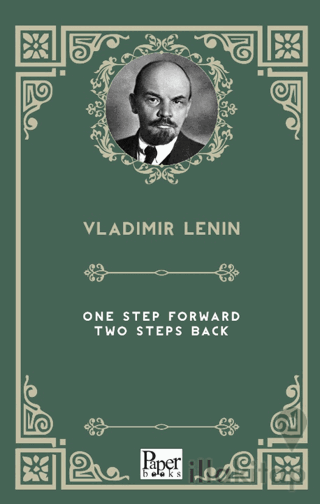
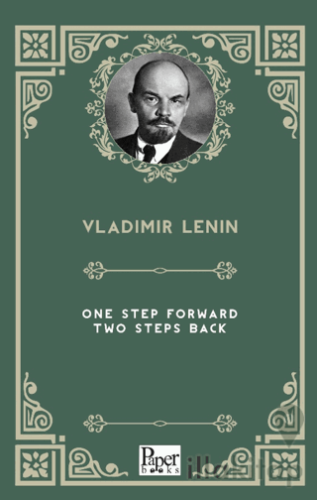
Vladimir Lenin’s One Step Forward, Two Steps Back is a seminal political analysis of the internal debates within the Russian Social Democratic Labour Party (RSDLP) and a foundational text on revolutionary organization. Written in 1904, this work systematically presents Lenin’s ideas on party structure, discipline, leadership, and strategy — ideas that would later shape the course of the Russian Revolution. In this text, Lenin defends the principles of ideological unity and centralized organization, emphasizing the need for a disciplined vanguard to ensure the effectiveness of the revolutionary movement. The debates captured in this work mark the theoretical beginning of the split between the Bolsheviks and the Mensheviks, defining a model of party organization that influenced revolutionary movements for generations. One Step Forward, Two Steps Back is not merely a historical polemic but a profound reflection on how revolutionary organizations are built, how internal democracy can function, and how collective will is forged. Lenin’s sharp reasoning and unwavering commitment to organization make this work a lasting classic in political theory and socialist strateg.
Vladimir Lenin’s One Step Forward, Two Steps Back is a seminal political analysis of the internal debates within the Russian Social Democratic Labour Party (RSDLP) and a foundational text on revolutionary organization. Written in 1904, this work systematically presents Lenin’s ideas on party structure, discipline, leadership, and strategy — ideas that would later shape the course of the Russian Revolution. In this text, Lenin defends the principles of ideological unity and centralized organization, emphasizing the need for a disciplined vanguard to ensure the effectiveness of the revolutionary movement. The debates captured in this work mark the theoretical beginning of the split between the Bolsheviks and the Mensheviks, defining a model of party organization that influenced revolutionary movements for generations. One Step Forward, Two Steps Back is not merely a historical polemic but a profound reflection on how revolutionary organizations are built, how internal democracy can function, and how collective will is forged. Lenin’s sharp reasoning and unwavering commitment to organization make this work a lasting classic in political theory and socialist strateg.
| Taksit Sayısı | Taksit tutarı | Genel Toplam |
|---|---|---|
| Tek Çekim | 261,45 | 261,45 |
| 2 | 139,88 | 279,75 |
| 3 | 94,99 | 284,98 |
| 6 | 50,11 | 300,67 |
| 9 | 34,86 | 313,74 |
| 12 | 27,45 | 329,43 |

-
-
%17İNDİRİM145,00TL 120,35TL
-
-
-
-
-
-
-
-
%17İNDİRİM135,00TL 112,05TL